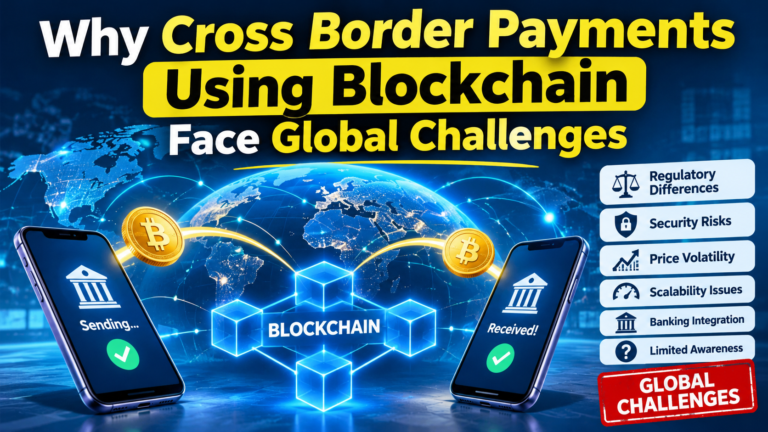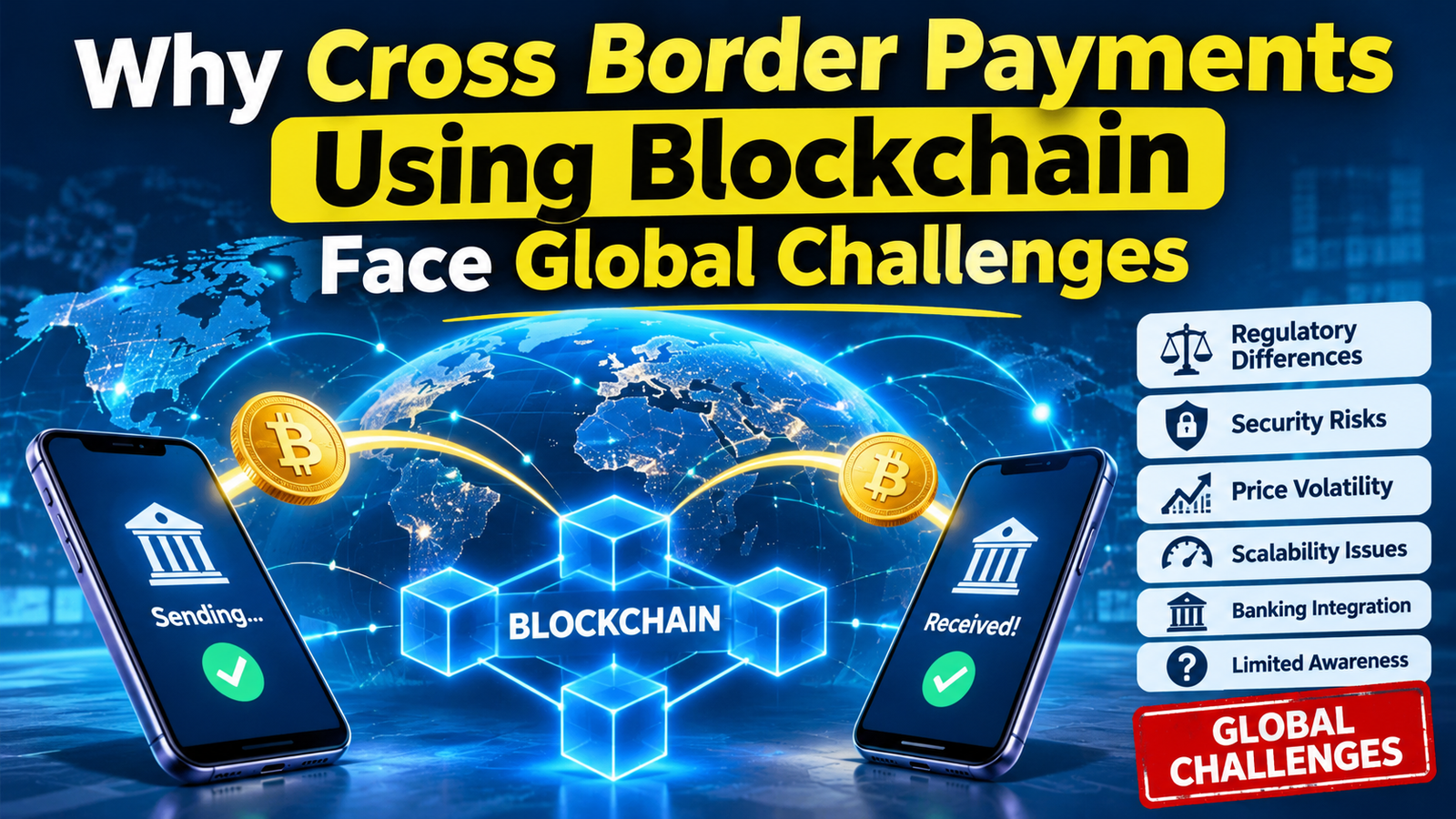
Major global challenges affecting blockchain-based international payments.
Cross Border Payments Using Blockchain offer an alternative to traditional international payment systems. However regulatory restrictions, security risks, technical limitations and currency issues continue to create challenges for global adoption.
Different Government Regulations
One of the biggest challenges is the difference in financial regulations between countries. Some governments support blockchain payment technology, while others impose strict restrictions on cryptocurrency transactions.
Payment providers must follow local licensing requirements, financial reporting rules, and anti-money laundering regulations. These differences make it difficult to operate one payment system across multiple countries.
Security Risks and Cyberattacks
Blockchain networks use cryptographic techniques to protect transactions but connected platforms and digital wallets can still face security threats.
Common risks include:
- Phishing attacks and wallet theft.
- Smart contract vulnerabilities.
- Cryptocurrency exchange hacking.
- Private key loss.
- Fraudulent payment applications.
These threats can cause financial losses and reduce confidence in blockchain-based financial services.
Cryptocurrency Price Volatility
Cryptocurrency price fluctuations can create problems for international payments. Bitcoin and Ethereum for example can experience significant price changes within short periods.
A person sending digital currency may find that its value changes before the recipient converts it into local currency.
Stablecoins are sometimes used to reduce this problem because they are designed to maintain a relatively stable value against traditional currencies. However they also involve issuer, reserve and regulatory risks.
Scalability and Transaction Speed
Some blockchain networks have limited transaction-processing capacity. When network activity increases, confirmation times may become longer and transaction fees may rise.
This creates difficulties for businesses that need to process large volumes of international payments.
To support wider adoption, blockchain networks need better scalability, faster processing, and affordable transaction costs.
Lack of Global Blockchain Standards
Different blockchain networks use different technical structures and transaction protocols. This can create compatibility problems when financial institutions attempt to connect separate systems.
For example, a payment platform operating on one blockchain may not communicate directly with another network.
Without common technical standards, payment providers may need additional infrastructure and conversion services to complete transactions between different networks.
Integration with Traditional Banking Systems
Traditional banks remain important for international payments, currency conversion, and financial settlements.
Connecting blockchain systems with existing banking infrastructure can be complicated because banks have established verification procedures, compliance requirements, and technical systems.
Businesses may also need banking partnerships to convert digital assets into local currencies. These requirements can increase costs and create additional processing steps.
Privacy and Data Protection Concerns
Blockchain transactions can create permanent digital records. On public networks, transaction information may be visible to other participants, even when users operate through pseudonymous addresses.
This creates concerns for individuals and businesses that want to protect their financial information.
Payment providers must also consider data protection laws including the European Union’s General Data Protection Regulation (GDPR). They need to manage personal information carefully while maintaining the transparency required by financial regulations.
High Implementation and Maintenance Costs
Developing a blockchain payment system requires technical expertise, secure infrastructure, and regular maintenance.
Smaller businesses may find these requirements expensive. Common costs include:
- Blockchain development and integration.
- Cybersecurity testing.
- Regulatory compliance.
- Infrastructure maintenance.
- Employee training.
These expenses can make blockchain adoption difficult for organizations with limited budgets.
Currency Conversion and Liquidity Problems
International transactions often require converting one currency into another. Blockchain technology does not automatically remove the need for currency exchange.
Some digital assets have limited liquidity in particular markets. As a result users may face difficulties exchanging them quickly at competitive rates.
Businesses using crypto for cross border payments must consider exchange availability, conversion fees, market liquidity and local currency support before selecting a payment provider.
Limited User Awareness and Technical Knowledge
Many people and businesses do not fully understand how blockchain payment systems work.
Managing digital wallets, protecting private keys and verifying transaction details can be difficult for inexperienced users.
A small mistake such as sending funds to an incorrect wallet address may result in permanent financial loss. Payment providers need to improve user education and develop simpler interfaces to make these services easier to use.
Blockchain Cross-Border Payment Use Cases
A blockchain cross border payments use case may involve international business transactions, supplier payments, worker remittances and financial settlements.
For example a company in Germany may use a blockchain-based payment provider to transfer funds to a supplier in Pakistan. The provider may use a digital asset or stablecoin to move value before converting it into the recipient’s local currency.
However the actual process depends on the payment provider, supported countries, banking partnerships and applicable regulations.
How Often Is Blockchain Used?
Blockchain technology is used regularly in cryptocurrency transfers, digital asset transactions, financial settlements and selected international payment services.
However its usage varies by country and industry. Traditional banking systems continue to handle a substantial share of international payments while blockchain adoption remains concentrated in particular financial services.
How Many Cross-Border Payments Happen Daily?
There is no single universally accepted daily figure for all cross-border payments. International transactions include bank transfers, business payments, remittances, card transactions, and other financial activities.
The total also depends on how payment providers and researchers define and measure a cross-border transaction. Blockchain-based payments represent only one part of this wider financial activity.
Frequently Asked Questions (FAQs)
- What are the main challenges of blockchain international payments?
The main challenges include regulatory differences, cybersecurity threats, cryptocurrency volatility, scalability, privacy concerns and banking integration. - Are blockchain international payments completely secure?
No. Blockchain networks use cryptographic security but digital wallets, exchanges, payment applications and smart contracts can still have vulnerabilities. - Why do governments regulate blockchain payments?
Governments regulate these payments to address money laundering, financial crime, taxation, consumer protection and financial stability. - Can blockchain reduce international transaction fees?
Some blockchain payment systems can reduce intermediary costs. However network fees, currency conversion charges and service provider fees may still apply. - Is cryptocurrency necessary for blockchain international payments?
No. Some payment systems use cryptocurrencies or stablecoins, while others use blockchain infrastructure for transaction processing and financial settlement. - How does cryptocurrency volatility affect international payments?
Price fluctuations can change the value of transferred funds before the recipient converts them into local currency. - What is the biggest security concern in blockchain payments?
Private key theft, phishing attacks, fraudulent platforms and smart contract vulnerabilities are major security concerns. - Can small businesses use blockchain for international payments?
Yes. However they must consider technical requirements, payment provider availability, transaction costs and local regulations. - Does blockchain work with traditional banking systems?
Yes. Some payment providers connect blockchain networks with traditional banks to support deposits, withdrawals and currency conversions. - Will blockchain replace traditional international payment systems?
Blockchain may become an important part of international payment infrastructure but complete replacement is uncertain. Traditional banking systems remain essential in many markets.
Sum up
Blockchain technology offers new possibilities for international financial transactions but regulatory differences, security threats, scalability limitations and currency conversion problems continue to affect its adoption.
Financial institutions and payment providers must improve security, develop compatible systems and follow international regulations. Addressing these issues will help Cross Border Payments Using Blockchain become more practical and reliable for businesses and individuals.
About the Author