
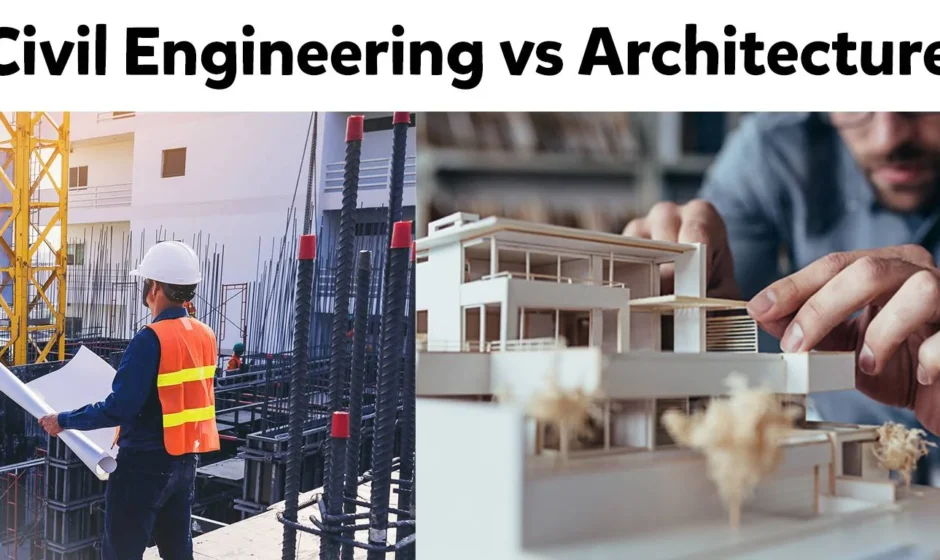

Choosing between Civil Engineering vs Architecture is one of the biggest decisions students make when exploring careers in the construction or design and development industry. Both fields sound similar on the surface, but in reality, they are entirely different in terms of goals, work style or education and job roles and long term career growth.
If you are confused about which career fits you best, this guide will walk you through every detail in a simple, informal, and practical way. Whether you are a student looking for guidance, a parent helping your child decide, or even someone planning a project and trying to understand the difference, this article will help you move in the right direction.
Let’s break down everything clearly so you can confidently choose your path.
What Exactly Is Civil Engineering?
Civil engineering is all about building and maintaining strong, safe, and long-lasting structures. Civil engineers deal with technical and structural sides of construction, including bridges, highways, dams, buildings, airports, and tunnels.
In simple words:
Architects imagine it. Civil engineers make it real and safe.
Civil engineers ensure that whatever is being built can survive weight, weather, and long-term usage. They work on calculations, planning, materials, and project execution.
What Civil Engineers Do on a Daily Basis
Civil engineers handle countless responsibilities, including:
- Designing structural framework for construction projects
- Conducting site inspections, soil tests, and feasibility studies
- Using engineering software for analysis and modeling
- Managing contractors and construction teams
- Ensuring safety codes and government regulations are followed
- Solving on-site problems during construction
- Overseeing the project from planning to final completion
Their work is technical, analytical, and very detail-oriented. If you love math, physics, and problem-solving, civil engineering may feel like the right fit.
Skills Needed for Civil Engineering
Civil engineering requires a mix of technical knowledge and project management abilities. Top skills include:
- Strong mathematics and physics
- Structural analysis and load calculation
- Proficiency in software like AutoCAD, SAP2000, STAAD Pro
- Project management and leadership
- Critical thinking and quick problem-solving
- Understanding material strength and construction methods
These are essential for ensuring structures are safe and functional.
Career Scope and Salary for Civil Engineers
Civil engineering is one of the most stable fields because construction never stops—whether it’s roads, commercial buildings, or infrastructure upgrades.
Civil engineers can work in:
- Construction companies
- Government infrastructure projects
- Real estate developers
- Consulting firms
- Transportation departments
- Water resource management
- Urban planning authorities
They can also become project managers, consultants, or freelance engineers after gaining experience.
Entry-level civil engineers usually earn a moderate salary, but with experience, certifications, and project exposure, income grows steadily.
What Is Architecture?
Architecture is the blend of art, creativity, and technical design. Architects focus on how a building looks, feels, and functions for the people using it. They bring imagination to life by designing homes, offices, commercial buildings, interiors, landscapes, and even entire urban layouts.
If civil engineering is the foundation of construction, architecture is the personality.
Architects create environments where people live, work, move, relax, and interact. They visualize the space, choose materials, design layouts, and ensure the project aligns with the client’s goals.
What Architects Do Every Day
Architects handle both creative and technical responsibilities, including:
- Designing building concepts, layouts, and spaces
- Creating 3D models, sketches, and blueprints
- Meeting clients to discuss needs, style, and functionality
- Selecting materials, colors, textures, and finishes
- Collaborating with engineers, contractors, and interior designers
- Ensuring the design meets safety and environmental rules
- Overseeing construction to ensure the design is followed
Their work is fascinating if you love aesthetics, creativity, and visual design.
Skills Required for Architecture
Architecture requires a unique combination of artistic and technical skills, such as:
- Creativity and strong imagination
- Ability to sketch, draw, and visualize spaces
- Knowledge of building materials and construction processes
- Software skills: Revit, SketchUp, 3ds Max, AutoCAD
- Attention to detail and user experience
- Good communication and client-handling skills
Architects must think about beauty, comfort, and practicality—all at once.
Career Scope & Salary for Architects
Architecture offers a wide variety of career paths, including:
- Architectural firms
- Construction and real estate companies
- Interior design studios
- Urban planning agencies
- Freelancing or independent practice
- Landscape design
- 3D visualization and modeling
Architects with strong portfolios and design sense can build a very successful career. While entry-level salaries can be modest, income grows significantly with experience, specialization, and client networks.
Civil Engineering Vs Architecture: The Main Differences
Understanding the differences between Civil Engineering vs Architecture helps you choose the right direction. Both fields overlap during construction but their goals are completely different.
Civil engineers focus on:
- Structure
- Safety
- Strength
- Functionality
- Technical details
Architects focus on:
- Design
- Aesthetics
- Space planning
- User experience
- Concept creation
One turns ideas into solid structures; the other turns imagination into designs that people love to use.
Which Career Should You Choose?
This decision depends entirely on your interests, personality, and long-term goals. Let’s keep it simple.
Choose Civil Engineering If…
- You enjoy physics, math, and problem-solving
- You like understanding how things work structurally
- You want a stable career with constant demand
- You see yourself managing construction sites
- You prefer technical work rather than creative design
You will enjoy a career that is practical, analytical, and full of real-world challenges.
Choose Architecture If…
- You love creativity, design, and aesthetics
- You enjoy sketching and imagining new spaces
- You want to work closely with clients and create unique environments
- You prefer conceptual and visual tasks
- You see beauty in buildings and want to shape how people experience spaces
You will enjoy a career that is expressive, creative, and visually rewarding.
Education Requirements
Before making a final decision, you should know what each field demands academically.
Education for Civil Engineering
- Bachelor’s degree in Civil Engineering (B.E. or B.Sc.)
- Includes advanced mathematics, mechanics, structures, and construction management
- Optional master’s for specialization in structural, transportation, or geotechnical engineering
Civil engineering requires a strong academic foundation in science.
Education for Architecture
- Bachelor of Architecture (B.Arch) – typically a 5-year program
- Focuses on design, theory, building materials, and spatial planning
- Internships and licensing exams may be required
Architecture requires creative talent supported by technical learning.
Current Job Market Trends For Both Careers
Both professions remain in demand worldwide because infrastructure and real estate continue to grow. However, job consistency differs slightly.
Civil engineering tends to offer more stable job opportunities because construction projects—from roads to bridges—are continuous. Government projects and private developers hire civil engineers year-round.
Architecture demand depends heavily on client trends, commercial development, and real estate growth. Architects with strong portfolios and communication skills stand out.
Your Long-Term Career Advancement Path
Let’s talk about growth potential, something every student should consider.
Civil engineers often move into:
- Project management
- Consulting
- Government engineering roles
- Construction management
- Senior site management
Architects can grow into:
- Design directors
- Interior design specialists
- Urban planners
- Creative consultants
- Owners of independent architecture firms
Both paths have excellent long-term growth depending on your passion and efforts.
Short Note You Need To Know
Choosing between Civil Engineering vs Architecture depends on your personal interests, strengths, and career goals. Civil engineers focus on the technical and structural side of construction, ensuring strength, safety, and durability. Architects focus on the creative and functional design of buildings, shaping how people use and experience spaces.
If you’re analytical, technically minded, and enjoy problem-solving, civil engineering may be the perfect match. If you’re creative, imaginative, and passionate about design, architecture may be your ideal career path.
Both professions offer strong career opportunities, long-term growth, and the chance to contribute to the built world around us. Understanding how each field works will help you choose the right direction and build a future that aligns with your skills and passion.
Upgrade Your Knowledge Through These Insights
1. What is the biggest difference between civil engineering and architecture?
Civil engineering focuses on structure, safety, and technical aspects, while architecture focuses on design, creativity, and user experience.
2. Which career pays more in the long run?
Both fields can be highly rewarding, but civil engineers often start with more stable incomes. Architects can earn more once they build a strong portfolio and client base.
3. Is architecture harder than civil engineering?
Both are challenging but in different ways. Architecture is more creative and time consuming; civil engineering is more technical and math heavy.
4. Can architects and civil engineers work together?
Yes. In fact almost every construction project requires both. Architects design; engineers make the design structurally possible.
5. Which field is better for the future?
Both fields have excellent future demand because infrastructure, real estate, and urban development continue to grow worldwide.