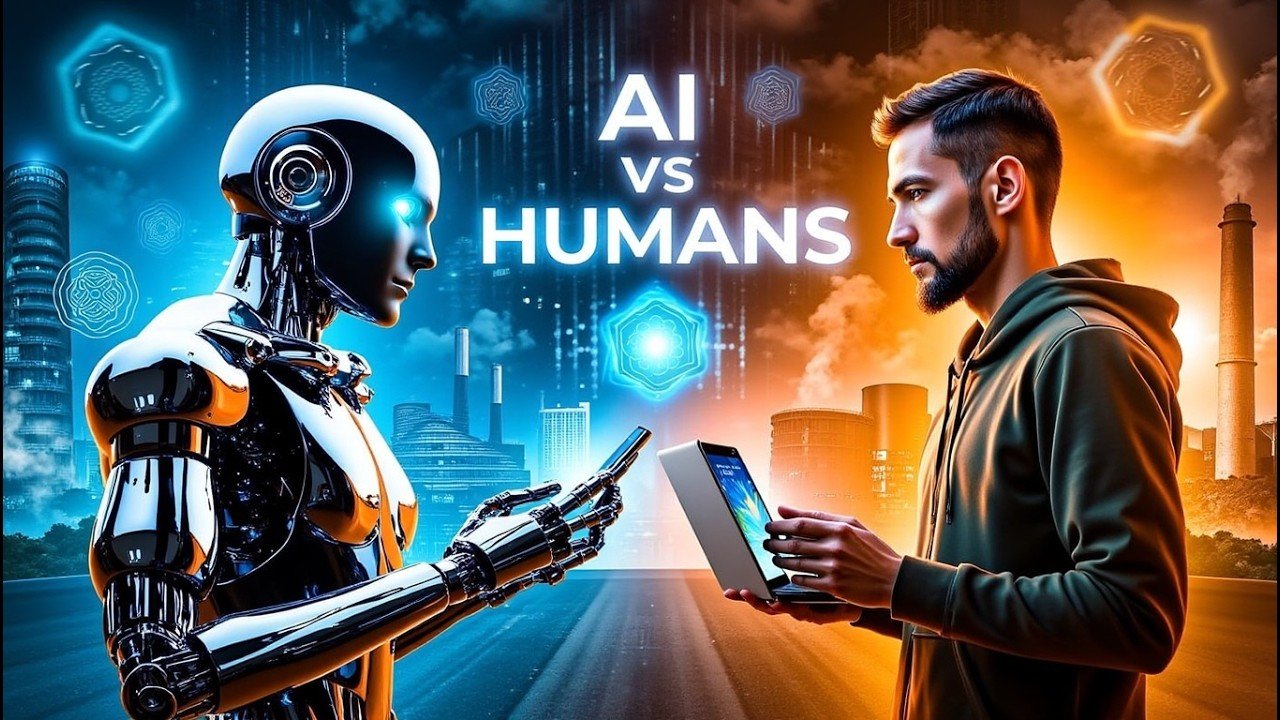
Artificial intelligence can write, analyze data, answer questions, create images and solve different problems. These abilities can make AI seem similar to human intelligence.
However AI and humans process information in different ways. Humans use experience, emotions, memory and judgment. AI mainly works with patterns, data, algorithms and instructions.
The difference becomes clearer when we look at how both approach decisions, creativity, context and unexpected situations.
How Human Thinking Works
Human thinking develops through experience and interaction with the real world. People learn from success, failure, relationships, education and personal experiences.
A person’s past can influence a current decision. Two people may receive the same information but reach different conclusions because their experiences are different.
Humans can also change their opinions when they receive new information or experience something that challenges their previous beliefs.
How AI Processes Information
AI systems process information using trained models and algorithms. They identify patterns within data and use those patterns to produce an output.
For example an AI writing tool can analyze language patterns and generate a response based on the user’s instructions.
AI can process information quickly but it does not gain knowledge through everyday life experiences in the same way humans do.
Can AI Think Like Humans? The Main Difference
The answer depends on what we mean by thinking.
AI can perform tasks that appear to involve reasoning. It can compare information, solve certain problems, generate ideas and provide detailed answers.
Human thinking involves more than producing an answer. People connect information with memories, emotions, goals, social situations and personal experiences.
An AI response can look thoughtful without coming from the same type of human experience.
Human Experience Affects Decisions
Experience gives people practical knowledge that may not be easy to explain.
A business owner may notice that a customer is unhappy from their tone and behavior. A teacher may realize that a student needs help based on small changes in behavior.
These judgments often come from repeated real-world situations.
AI can analyze information about a situation but its result depends on the data and context provided to it.
The Speed of AI Data Processing
AI is particularly useful when a task involves large amounts of information.A person may need hours to compare hundreds of documents. AI can process and organize information much faster when the system has access to the necessary data and tools.
AI can also identify patterns across large datasets. This makes it useful for research, data analysis, software development, business operations and content work.
Speed is one of AI’s strongest advantages.
How Context Affects Human Thinking
Context can completely change a human decision.
For example, telling a joke with close friends is different from making the same joke during a serious business meeting.
Humans naturally consider relationships, timing, social expectations and previous experiences.
AI can work with these factors when they are clearly included in the prompt or available through its tools. Missing context can lead to a less suitable response.
Creativity in Humans
Human creativity often grows from personal experiences, emotions, culture, curiosity, and observation.
A writer may create a story after remembering a childhood experience. An artist may develop an idea after observing something unusual.
People can also combine unrelated experiences to create something meaningful.
This process is difficult to separate from the person’s life and environment.
Creativity in AI
AI can generate stories, images, designs, names, marketing ideas and other creative outputs.It can also produce many variations within a short time. This makes it useful during brainstorming and early stages of creative work.
However AI generates content from patterns learned from data rather than personal life experiences.
Research comparing human and AI creativity shows that the results depend on the task and measurement method. AI can perform strongly on some creativity tests, while humans can still show stronger performance in other areas.
Can AI Think Like Humans in Creative Work?
AI can support creative work without replacing human judgment.A writer can ask AI for several headline ideas and then choose the one that best fits the audience. A designer can generate different concepts before selecting a final direction.
The human still decides what feels appropriate, useful, original or meaningful.
This combination allows AI to handle idea generation while humans provide direction and judgment.
The Role of Emotions
Emotions influence many human decisions.Fear can make a person more cautious. Excitement can encourage someone to take a risk. Empathy can affect how a person responds to another individual’s problem.Emotions do not always improve decisions. They can also create bias or lead to impulsive choices.
Key point to know: AI can recognize emotional language and produce an appropriate response, but that is different from personally experiencing an emotion.
How Humans Make Difficult Decisions
People often make decisions without having complete information.A manager may need to choose between two options when neither one guarantees success. The decision may depend on experience, risk tolerance, timing, and expected consequences.
AI can compare available information and provide possible outcomes.The final judgment may still require a person who understands the situation and accepts responsibility for the decision.
AI and Human Errors
Humans and AI can make different types of mistakes.People can misunderstand information, rely on assumptions, or make decisions based on personal bias.AI can also produce incorrect information or generate a confident response from an inaccurate pattern.
Key fact:This is why AI output should not automatically be treated as correct simply because it sounds detailed or confident.
Why AI Can Still Be Extremely Useful
AI does not need to think exactly like a human to be useful.Its ability to process information, automate repetitive tasks, generate options and identify patterns can save considerable time.
Businesses can use AI for customer support, data analysis, document processing, software development, marketing and research.The value comes from using its strengths for tasks where speed and information processing matter.
Why Human Thinking Still Matters
Humans bring qualities that are closely connected to real-world experience.People understand personal relationships, social consequences, cultural expectations, and emotional situations through direct experience.They can also question whether a technically correct answer is actually the right choice for a particular situation.That judgment becomes especially important when decisions affect other people.
Humans and AI Work Better Together
The strongest approach is often human-AI collaboration. AI can collect information, summarize material, identify patterns, and generate possible solutions. This also shows why Can AI Think Like Humans is not only about producing similar results.
Humans can check the information, add context, question assumptions, and make the final decision. For example, a researcher can use AI to organize research papers while personally checking the reliability of important findings.
Will AI Replace Human Thinking?
AI may replace some tasks that people currently perform. However, replacing individual tasks is different from completely replacing human thinking.
Many jobs require communication, judgment, responsibility, creativity, and decisions in unpredictable situations.
AI can assist with these activities, but human involvement remains valuable when the situation requires context and accountability.
What Makes Human Thinking Unique?
Human thinking is shaped by a combination of memory, experience, emotions, values, relationships, and physical interaction with the world.
People can learn from events that happen to them and change their behavior based on those experiences.
They can also attach personal meaning to information. That meaning can influence future decisions.
Sum up
Can AI Think Like Humans is not a simple yes-or-no question. AI can perform many tasks that look like human reasoning, creativity and problem-solving.However the way AI produces an answer differs from the way people develop thoughts through experience and interaction with the world.AI offers speed, scale, pattern recognition and automation. Humans offer context, experience, judgment, emotions and responsibility.
Instead of treating them as direct replacements for each other it makes more sense to use their strengths together. The most useful future may be one where AI handles what it does best while humans remain responsible for decisions that require real-world judgment.
About the Author