

Robotics Technology The Future Of The World – A Detailed Insight Into the Next Technological Revolution
In the modern era of rapid innovation, Robotics Technology The Future Of The World is no longer just a prediction—it is an unfolding reality that is reshaping industries, societies, and the global economy. From manufacturing and healthcare to education, defense, and everyday life, robots are transforming the way humans interact with machines. As automation accelerates and AI becomes smarter, robotics is emerging as the backbone of the next industrial revolution.
This article explores how robotics works, the components that power robotic systems, programming methods, real-world applications, challenges, and why experts believe that Robotics Technology The Future Of The World will define global progress for decades to come.
1. Introduction: Why Robotics Matters Today
Humanity is entering an age where robots are becoming essential partners rather than optional tools. With increasing labor shortages, the need for precision, and the demand for continuous productivity, robotics provides unmatched advantages. This is why many futurists believe that Robotics Technology The Future Of The World will play the same role that electricity and the internet played in earlier centuries.
2. The Core Mechanics Behind Modern Robotics
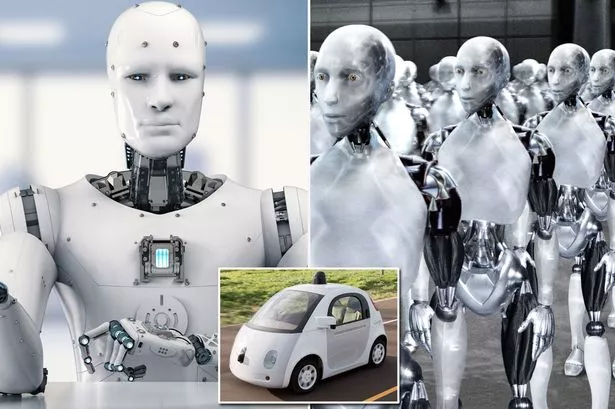
Today’s robotics systems operate through a combination of hydraulic, pneumatic, and electrical energy. Over the years, electrical motors have become smaller yet far more powerful, giving robots improved power-to-weight ratios. This technological progression has made electrically driven robots the most dominant type in manufacturing and service industries.
3. Components of a Robot: Understanding the Building Blocks
A robot is a highly engineered machine composed of multiple components designed for precise tasks. Depending on its application, robots vary in shape, size, and structural framework.
3.1 End Effectors: The Hands of Robots
The end effector—often described as the “hand of the robot”—is where the actual task is performed. These can include:
- Specialized tools like spray guns, welding torches, or cutting devices
- General-purpose grippers such as vacuum grippers, magnetic grippers, or robotic fingers
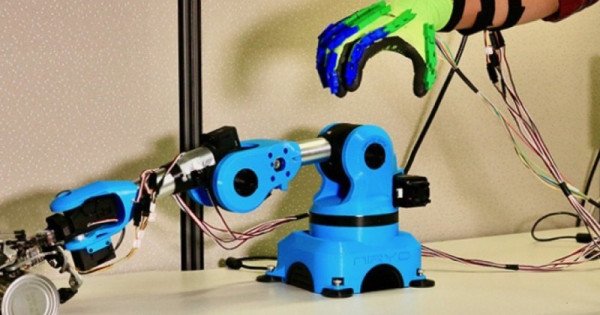
These end effectors allow robots to interact with objects, making them ideal for industrial and commercial uses. As Robotics Technology The Future Of The World advances, end effectors are becoming smarter, more sensitive, and more flexible.
4. Sensors in Robotics: Giving Machines a Sense of the World
Sensors are the backbone of intelligent robotic systems. They help robots understand their environment, adjust movements, detect errors, and ensure precision.
4.1 Types of Essential Sensors
- Vision sensors – computer vision cameras enabling object detection and analysis
- Force and torque sensors – measure pressure applied during tasks
- Speed and acceleration sensors – ensure safe and stable movement
- Tactile sensors – simulate the human sense of touch
- Proximity and distance sensors – allow robots to detect nearby objects
Most traditional industrial robots only used binary sensors similar to an on/off switch. However, binary feedback limits the ability to make smart decisions. Modern robotics, especially with AI integration, moves toward advanced sensory feedback, enabling robots to perform tasks with minimal human supervision.
This sensory evolution ensures that Robotics Technology The Future Of The World becomes more adaptive and intelligent.
5. Programming Robots: How Machines Learn and Perform Tasks
Robots can be programmed in two primary ways:
5.1 Teaching by Guiding (Manual Programming)
This involves physically moving the robot arm through each stage of the process. The robot stores each position and repeats it during operation.
This method is common in:
- Assembly lines
- Packaging
- Welding operations
5.2 Offline Programming
In this more advanced method, robotic movements are defined through PC software. Engineers use simulations and high-level languages to create robotic behaviors without manually guiding the robot.
This type of programming reduces downtime and allows companies to test thousands of movements before using the real machine. As AI grows, offline programming is becoming essential for Robotics Technology The Future Of The World.
5.3 Continuous Path Programming
Some tasks require smooth, flow-like movements rather than point-to-point actions. Tasks such as:
- Spray painting
- Polishing
- Arc welding
- 3D printing
require a continuous path, which is handled by specialized robotic controllers.
6. Robotics in Modern Industries
No discussion about Robotics Technology The Future Of The World is complete without understanding its real-world applications.
6.1 Manufacturing and Industrial Automation
This is the most mature sector of robotics. Robots perform:
- Welding
- Assembly
- Painting
- Packaging
- Material handling
Automation has drastically increased speed, accuracy, and safety.
6.2 Healthcare Robotics
Medical robotics is transforming hospitals:
- Surgical robots
- Rehabilitation robots
- Diagnostic robots
- Medication dispensing robots
Robotic surgeries like Da Vinci are becoming more common due to precision and minimal invasiveness.
6.3 Service Industry Robots
These include:
- Cleaning robots
- Delivery robots
- Customer service bots
- Hospitality robots
Global hotels and malls are deploying service robots to improve customer experience.
6.4 Defense, Security, and Military Robotics
Robots help:
- Diffuse bombs
- Scout dangerous terrains
- Assist soldiers
- Conduct surveillance
Autonomous drones are especially vital in modern warfare.
6.5 Agriculture and Farming Robots
Smart farming uses:
- Crop monitoring drones
- Automated irrigation systems
- Harvesting robots
- Soil analysis bots
With rising food demand, agricultural robotics is essential for Robotics Technology The Future Of The World.
7. AI, Machine Learning, and the Evolution of Smart Robots
Artificial Intelligence is what transforms a basic robot into a smart robotic system. AI-powered robots can:
- Learn from experience
- Adapt to new situations
- Make decisions
- Recognize objects and patterns
Machine learning enhances:
- Autonomous navigation
- Object detection
- Predictive maintenance
- Human-robot collaboration
Intelligent robotics is the driving force behind Robotics Technology The Future Of The World.
8. Robotics in Daily Life: A Future That’s Already Here
Robots are now used in:
- Homes (vacuum robots like Roomba)
- Education (learning bots for kids)
- Transportation (self-driving cars)
- Banking and customer service
As consumer robotics grow, every household will eventually rely on robotic assistants.
9. Human-Robot Collaboration (Cobots)
Collaborative robots, or cobots, are designed to work safely with human workers. They help in:
- Manufacturing
- Research labs
- Warehouses
- Automotive assembly
Cobots reduce workload while maintaining human oversight. Their flexibility makes them essential for the future.
10. Challenges Facing Robotics Development
Despite progress, robotics still faces several challenges:
10.1 High Costs
Advanced robots and AI systems can be expensive to implement.
10.2 Ethical and Social Concerns
People fear job loss, although robotics also creates new jobs in tech fields.
10.3 Technical Limitations
Robots still struggle with:
- Complex decision-making
- Emotional intelligence
- Handling unpredictable environments
10.4 Cybersecurity
As robots depend on software, hacking is a serious concern.
11. The Global Future of Robotics: What Comes Next?
Experts believe that Robotics Technology The Future Of The World will include:
- Fully autonomous factories
- AI-driven hospitals
- Smart cities with robotic transportation
- Home robots serving as assistants
- Robot teachers and trainers
- Automated agriculture feeding the global population
As robotics merges with AI, biotechnology, nanotechnology, and quantum computing, the possibilities expand dramatically.
12. Why Robotics Technology The Future Of The World is Unstoppable
Let’s summarize why this keyword phrase—used naturally throughout—makes sense:
- Robotics Technology The Future Of The World represents the next industrial revolution.
- Robots are becoming essential in manufacturing, healthcare, transportation, education, and defense.
- AI-driven robotics will replace repetitive tasks and enhance human potential.
- The global economy is shifting toward automation, making robotics indispensable.
- Sensory systems, advanced programming, and AI integration make robots more capable than ever.
This transformative shift makes Robotics Technology The Future Of The World not just a topic—but a reality shaping tomorrow.
Conclusion
Robotics is no longer a futuristic dream—it is a present-day revolution. From industrial automation to everyday household use, robots are changing how the world operates. As technological advancements accelerate, Robotics Technology The Future Of The World will play a defining role in shaping industries, economies, and human lifestyles. With AI integration, smarter sensors, advanced programming, and limitless innovation, the future belongs to robotics—and the journey has only just begun.

br3333bet 3 Oct 2026
Been playing here for a week now and the payouts are legit. It is refreshing to find a platform that is this transparent. Love the vibe at br3333bet.
68wi 11 Oct 2026
[2941]68wi login করুন – বিকাশ পেমেন্ট ও সেরা স্লট গেম সাইট,68wi login করুন এবং বিকাশ দিয়ে অনলাইন casino এর অভিজ্ঞতা নিন। সহজেই 68wi app download করে ক্যাসিনো বোনাস পাওয়ার নিয়ম জানুন এবং খেলা শুরু করুন। visit: 68wi
bd1444game 12 Oct 2026
Such a cool platform with a great community feel. I spent hours exploring and everything just works perfectly. Love it! bd1444game